
Unitree Going Public: The Rise of China's Commercial Robot Empire
Wang Xingxing’s low-cost strategy made Unitree the world’s first profitable humanoid robot giant. Now, as the firm prepares to go public, the real test begins: can he transition to an AI era leader?

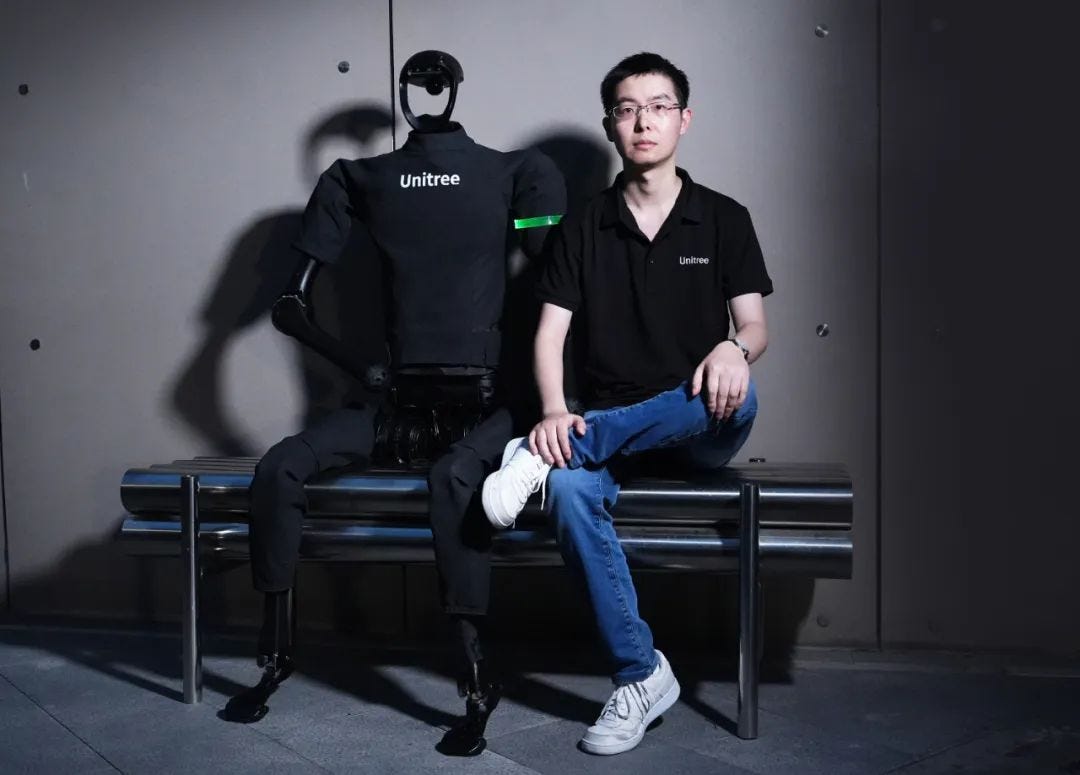
Founded in Hangzhou in 2016, Unitree Robotics (宇树) started its journey with quadruped robots and, a decade later, is set to list on the STAR Market this month.
On August 6, Unitree Robotics set its IPO price at 150.8 yuan (about 22.3 U.S. dollars) per share, valuing the company at approximately 60.9 billion yuan. Online subscription will open on August 10, with a listing expected in late August. DeepSeek appeared on the strategic placement list, receiving an allotment of 933,400 shares for 141 million yuan.
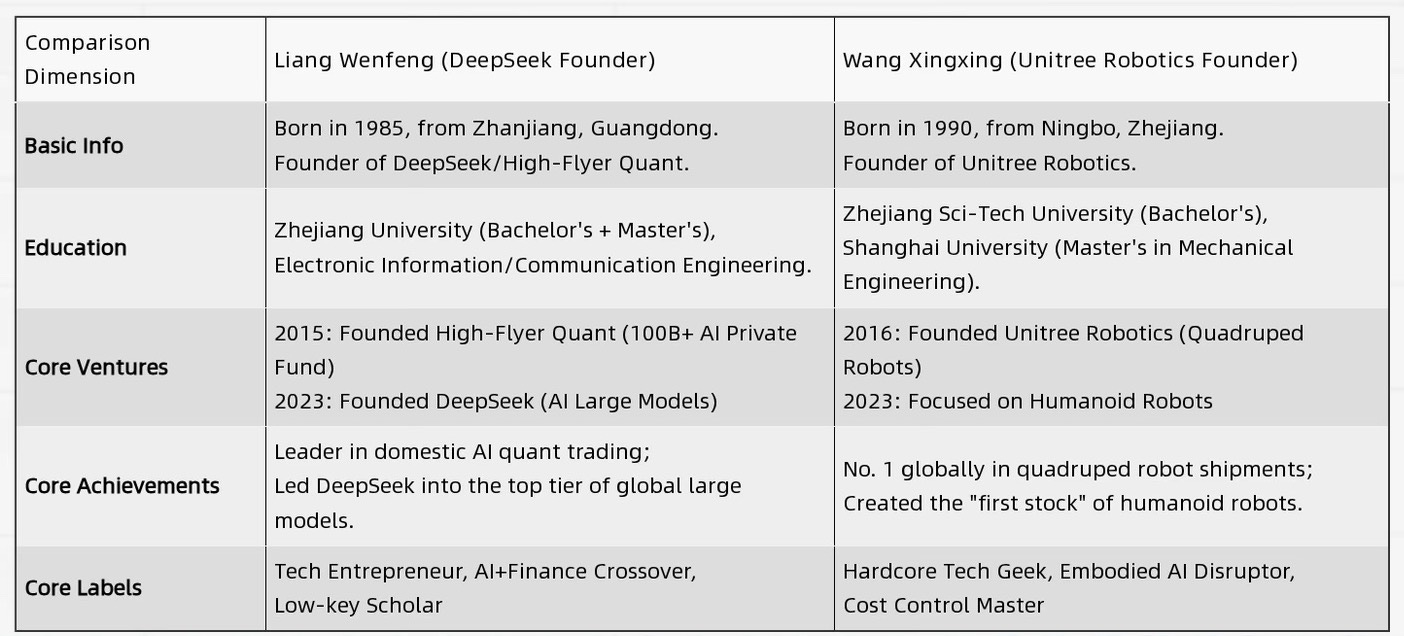
Following the IPO, Wang holds approximately 30% of the shares, positioning him to become the richest person born in the 1990s on the STAR Market. The shareholder lineup is star-studded, with dozens of institutions such as Sequoia Capital, Tencent, and the Meituan ecosystem participating. The Meituan ecosystem stands as the second-largest external shareholder.
With 2025 revenues hitting 1.7 billion yuan and a gross margin of 60%, it stands out as the only profitable player in the global humanoid robot race (DeepRobotics, also based in Hangzhou, has achieved profitability with its quadruped robots.) Unitree’s quadruped robots command roughly 70% of the global market share, while its humanoid G1 has surpassed 10,000 units off the production line—the only product in the industry to reach that scale.
Boasting over 95% self-developed core components and an 85% localization rate for complete machines, these numbers tell the story of Unitree Robotics. But is it merely a high-end gadget for enthusiasts, or the true standard-bearer for embodied AI? Let’s go back to the beginning.
In March 1990, Wang Xingxing was born in Yuyao, Ningbo, Zhejiang—a county town famous for its molds and plastics. Little did anyone know, this place would one day produce a defining founder in the robotics industry.
Unlike today’s robot entrepreneurs who often boast “child prodigy” or “scientist” pedigrees, Wang’s origin story is anything but glamorous.
Wang is a quintessential introvert, having been extremely shy since childhood; in fact, his middle school homeroom teacher once remarked that he was completely invisible in the classroom.
He seemed profoundly out of place within that conventional evaluation system. During a parent-teacher conference in middle school, his English teacher spoke bluntly to his parents: “This child is a bit slow.”
The teacher’s judgment was based solely on academic performance. Wang’s academic imbalance was staggering: his English was exceptionally poor, with his lowest score being a mere 3 on a single exam. Over the course of hundreds of English tests during his three years of high school, he passed only three times. With his English grades at the very bottom, he nearly failed to get into an ordinary high school, ultimately being admitted with a ranking close to the very last.
As it turns out, a video recorded last year revealed that Wang’s English has come a long way.
Yet, his intuition for the physical world flourished wildly beyond the confines of textbooks. At the age of 10, he created his first invention—a wind-powered car—using discarded cardboard. By 15, he was hand-polishing miniature turbojet engines and building aeromodels at home. This obsession with electromechanical devices became his sole sanctuary.
Back then, he had neither research funding nor precision machine tools. Hiding away in his dorm and the lab, his only tools were the most rudimentary ones: a manual drill, a file, a utility knife, and a pair of scissors. To save money, he scraped together just 9 yuan from his pocket money to buy cheap parts, and scavenged discarded scraps from everywhere to use as structural components.
During that bitterly cold holiday, he transformed himself into an old craftsman, cutting and polishing day and night. After months of work, this crude robot—built for a mere 200 yuan—finally managed to stand up in the lab and take its first wobbly steps.
This experience of hand-building a robot from scratch led him to distill a logic that he called a “miracle”:
“As long as you break down the ‘impossible’ into 300 or 3,000 technical steps and parameters, and conquer them one by one, a miracle happens.”
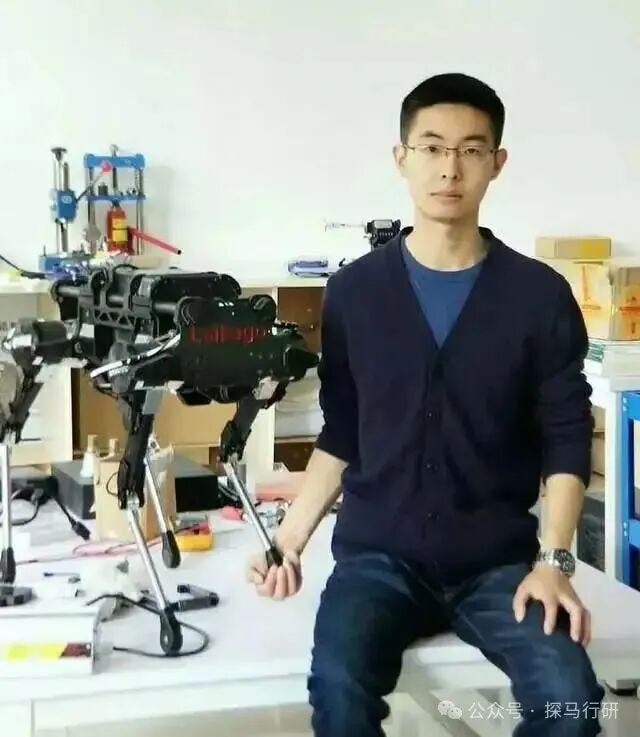
In 2013, Wang applied for a master’s program at Zhejiang University. Despite his outstanding performance in his major courses, he was once again shut out by the English proficiency cutoff, and was ultimately reassigned to Shanghai University.
It was precisely this missed opportunity, caused by his English scores, that led him to meet his future master’s supervisor, Jia Wenchuan. In a slightly dated laboratory at Shanghai University, Wang was about to embark on his second bold gamble in the field of embodied AI.
During that somewhat subdued graduate school interview, he presented his future supervisor, Jia Wenchuan, with a collection of electromechanical gadgets he had hand-built during his undergraduate years. Professor Jia didn’t dismiss him for his mediocre entrance exam scores; instead, he spotted an exceptionally rare “geek spirit” in the intricate details of how those parts fit together.
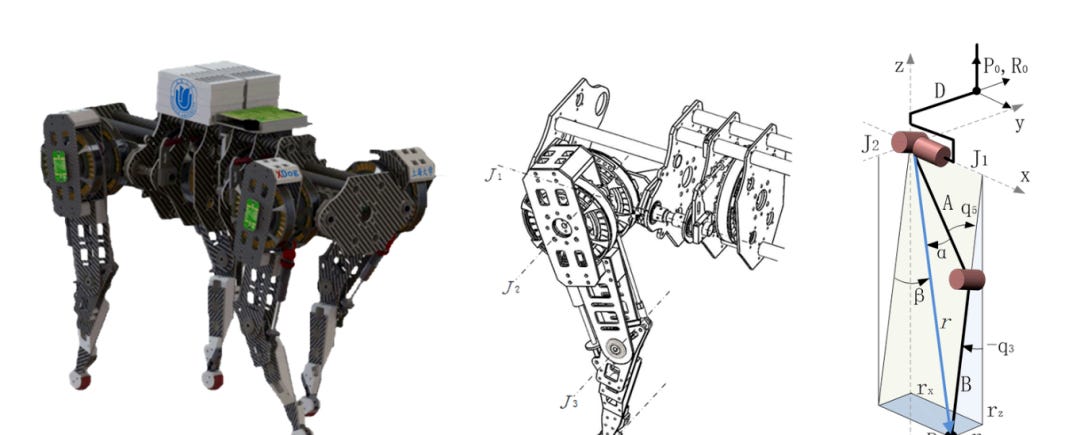
Wang became the only student from an outside university that Professor Jia admitted that year. At the time, Jia was leading an imaginative National Natural Science Foundation project: exploring high-performance locomotion of quadruped robots controlled by brain-computer interfaces. This provided Wang with a virtually unrestricted experimental playground. He quickly embarked on his second bold gamble, codenamed: XDog.
At the time, the absolute benchmark in the global legged robotics field was Boston Dynamics from the United States. The company had long adhered to a hydraulic drive approach; while this solution delivered immense power, it was prohibitively expensive, complex, and notoriously difficult to maintain. In his lab, Wang contemplated a highly unconventional alternative: attempting a direct-drive electric motor approach.
This choice carried enormous risk at the time. Failure could have meant failing to graduate on schedule. Yet he demonstrated a near-obsessive focus; to keep himself fully immersed in the R&D, he even taped a blue puppy icon to his workbench as a constant reminder of his goal. Jia Wenchuan later recalled those days:
“For three years, he was practically glued to his workbench, even during holidays.”
During the most grueling phase of development, Wang faced a stark reality. By mid-2015, he was supposed to graduate, but XDog was only halfway complete. By most people’s logic, securing the degree first and finding a stable job would have been the obvious choice. But Wang believed that a half-finished prototype was utterly worthless.
He made a decision that surprised those around him: he voluntarily applied to defer his graduation. In a later speech, he candidly shared his mindset at the time:
“I believed that what I was doing could unlock a new technological tree for humanity, so I advocated for deferring my graduation.”
This “self-isolated” R&D environment was extremely austere. Throughout the entire development process, his total investment was merely 10,000 to 20,000 yuan.
A miracle was ultimately born from the ruins of low-cost constraints. In 2015, Wang brought XDog to a startup competition in Shanghai, winning the second prize overall and earning his first pot of gold: an 80,000 yuan prize.
After his master’s thesis defense, Wang edited his R&D journey into a video titled “Every Man Should Have a Robot.” The clip quickly went viral on Chinese social media and was soon picked up by IEEE Spectrum’s Technology Review, which ran it under a headline roughly translating to: “The Chinese Robot Dog Walking Side-by-Side with Boston Dynamics.”
Here was a Chinese graduate student who had built a fully functional, running and walking quadruped robot for under 20,000 yuan—and had done it using an entirely different technical approach.
In an era when Boston Dynamics’ hydraulic solutions completely dominated the imagination of what robots could be, the impact of this achievement was nothing short of seismic.
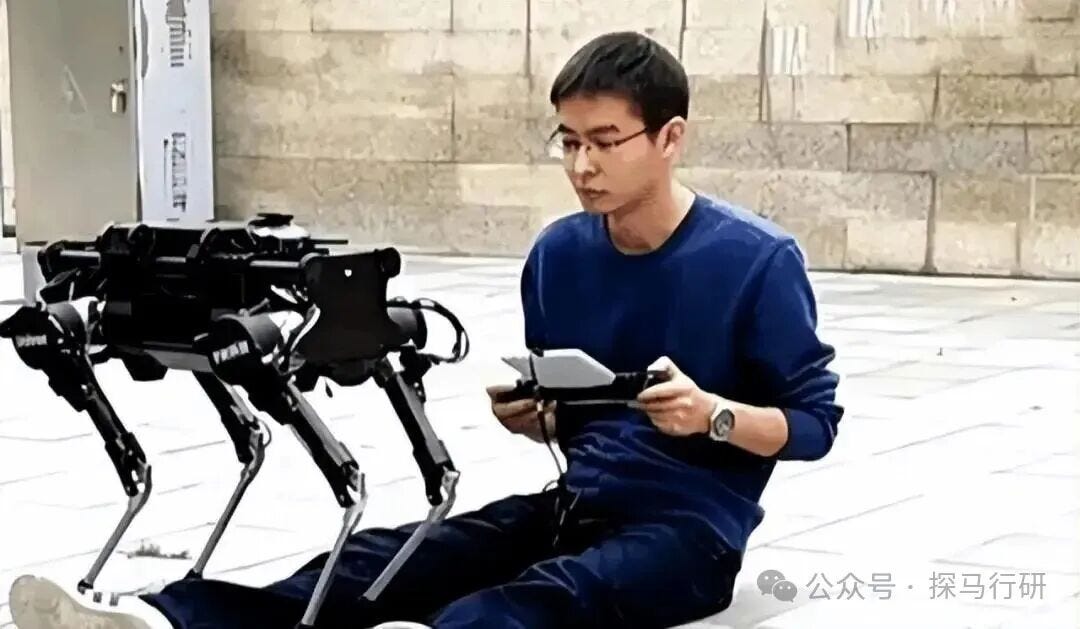
Wang joined DJI, the world’s largest civilian drone manufacturer, in 2016. For every hardware geek in China at the time, Shenzhen-based DJI was nothing short of a temple. Yet he stayed for barely two months. That fleeting tenure later became the most frequently cited footnote in tech circles when discussing DJI’s talent drain.
During those days at his DJI desk, his mind was tethered to the buzz across the ocean. After XDog went viral overseas, it wasn’t just geeks discussing the agility of its direct-drive motors; several sharp-eyed investment firms had also come knocking. He realized that the technology honed in the lab had reached the critical juncture where it had to be brought to market. On the day he decided to quit, there were no grand declarations.
“When I left DJI, I actually hadn’t figured out what the future would hold.”
In August 2016, 26-year-old Wang returned to Hangzhou with 2 million yuan in angel investment he had just secured. While the sum sounded substantial, it was incredibly fragile in the face of the exorbitant costs of robotics R&D. He registered his company with only 100,000 yuan in capital. To save money, he couch-surfed at a friend’s living room in Shenzhen while handling business matters. The sofa was too short; he could only curl up his body every night.
“I slept on that living room floor for over a month; my legs were in constant pain.”
That physical ache accompanied the entire startup phase of Unitree. On Unitree’s early ledger of life and death, his former employer DJI was supposed to play the most pivotal role. In 2018, DJI planned to participate in Unitree’s financing through its investment arm. The agreed amount was 10 million yuan, at a time when Unitree’s post-money valuation was merely 60 million yuan.
Had that investment materialized, DJI would have become the biggest external winner when this robotics giant eventually went public. The industrial and commercial registration changes and filings had even been completed, but the funds never arrived.
That year, DJI was engulfed in a multi-person supply chain anti-corruption campaign. The investment department’s work ground to a halt, and all external projects were suspended for compliance reviews. The DJI investment executive involved in the deal was penalized due to the fallout, causing the already-announced investment to collapse under DJI’s unilateral withdrawal.
This became the most perilous moment in Unitree’s history. The specter of a broken capital chain instantly descended upon the fledgling company, forcing Wang to urgently seek new reinforcements. In the darkest hour before dawn, former Tencent co-founder Zeng Liqing swiftly stepped in, injecting the lifeline capital that kept Unitree alive.
This missed opportunity left DJI regretfully stranded on the shore of the humanoid robot wave. For Wang, having endured the ache of the sofa and the harsh realities of a broken financing deal, he began to develop an almost obsessive intuition for cost defense. Years later, this intuition would transform him into the most chilling “price butcher” in the embodied AI arena.
To prove the reliability of his low-cost approach to the outside world, Wang pushed his robots onto the Spring Festival Gala stage three times in a row.
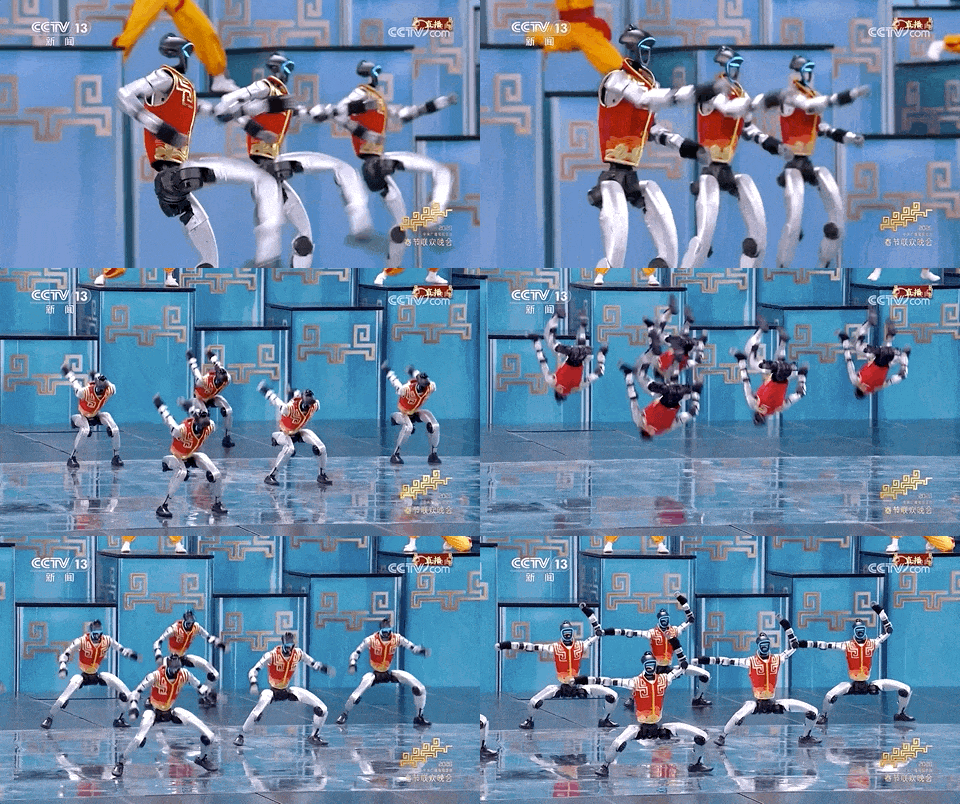
To the average viewer, it was simply a spectacle of 16 humanoid robots in floral jackets performing the traditional yangge dance, or executing synchronized martial arts routines like a team of athletes.
But to the engineers at Unitree’s headquarters, these performances were an extremely rigorous technical stress test. After just four minutes of high-intensity, highly dynamic movements, the LiDAR sensors on each robot would become scorching hot from the heat buildup. Technicians had to rush in the very moment the performance ended to spray them with coolant for rapid cooling.
Wang has spoken candidly about the rationale behind these “flashy stunts.”
“If society finds that robots underperform in a certain domain, or if people simply don’t want them working there, we can flexibly pivot to other application areas. Therefore, everything remains within controllable bounds.”
This cautious philosophy has permeated Unitree’s entire expansion strategy. Even as the world’s top humanoid robot company by shipment volume, Unitree employs only 175 R&D staff—accounting for roughly 36% of its total workforce. This lean structure has inevitably drawn criticism from outside observers, who question whether the company is under-investing in R&D.
Looking back from today’s vantage point, those early struggles feel almost jarring in their contrast. In just the past two years, Wang’s public recognition has traced a steep upward curve:
April 2025: Awarded the “China Youth May Fourth Medal.”
February 2026: Invited to speak at the Beijing Private Enterprise Symposium, where he was the only founder born in the 1990s to take the stage.
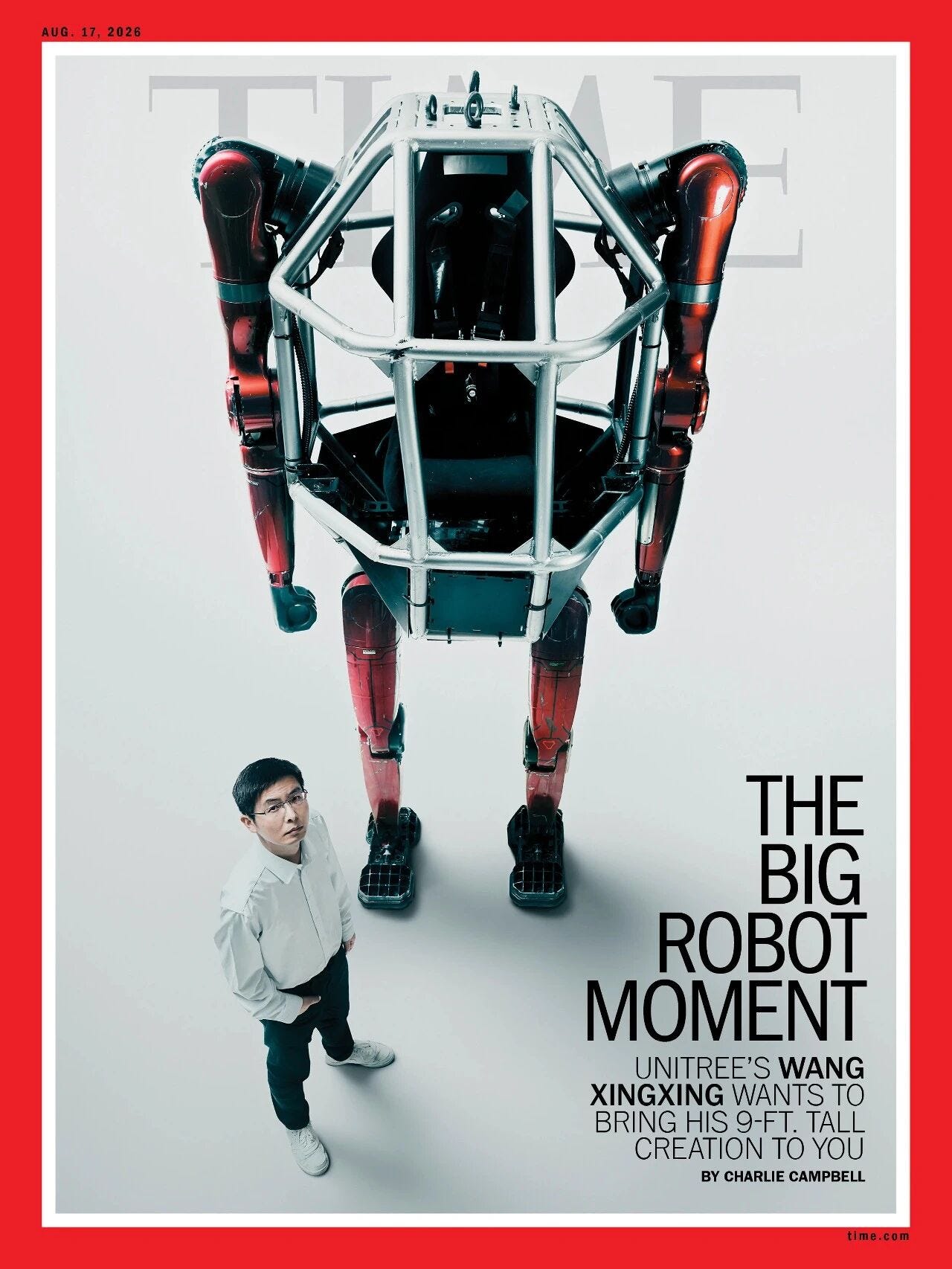
May 2026: Featured on the cover of Time magazine alongside his manned transforming mecha, the GD01, under the headline “The Age of Robots Has Arrived.” (The last Chinese entrepreneur to grace that cover was Ma Huateng in 2018.)
February 2026: Appointed Deputy Director of the MIIT’s Technical Committee for Humanoid Robots and Embodied AI Standards.
There’s no question: this young founder is now firmly in the spotlight.
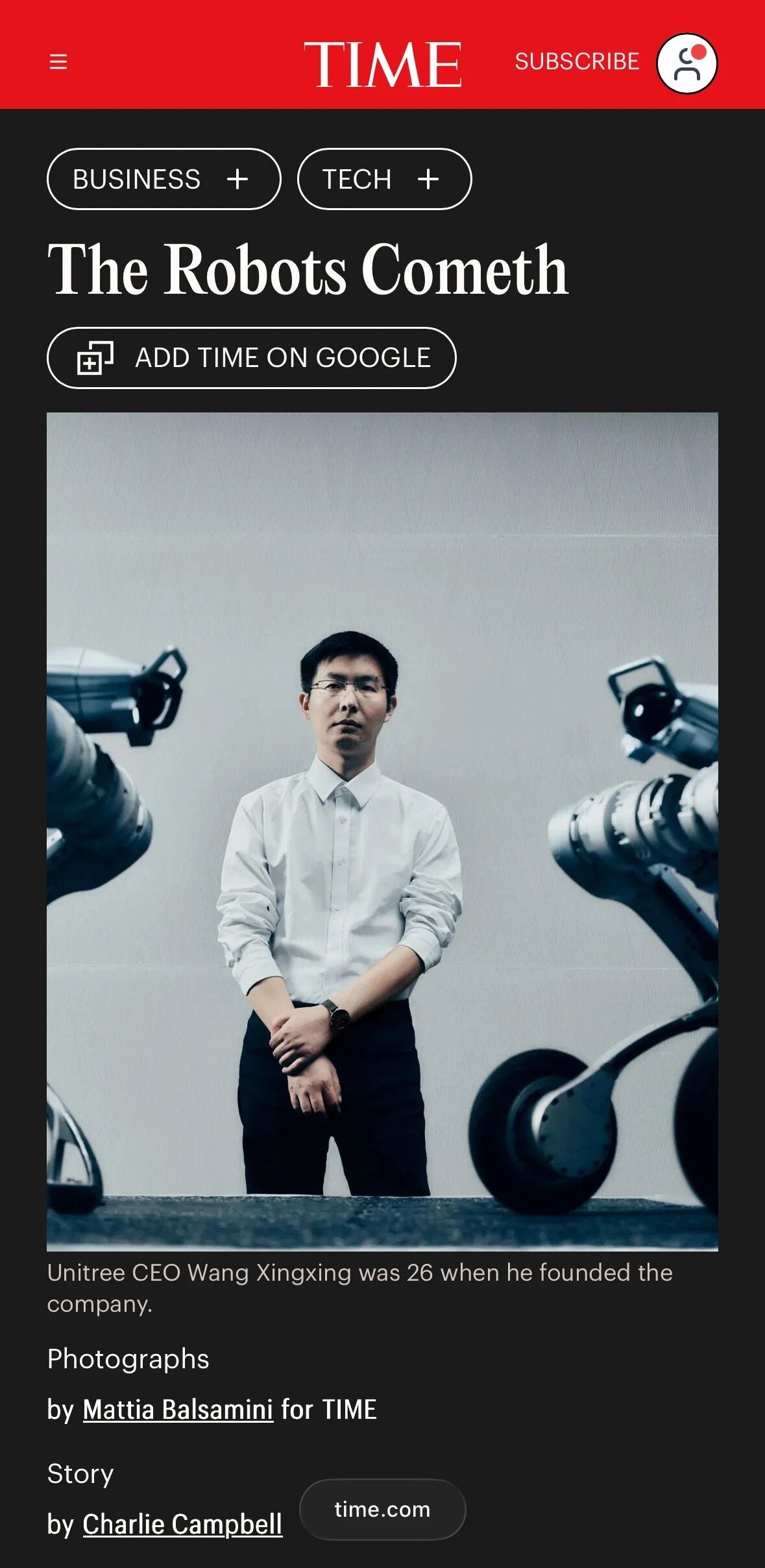
Wang Xingxing didn’t build robots alone.
Unitree’s founding team includes three other members, all born in the 1990s, who completed the puzzle in sales, mechanical structure, and algorithms & software. They weren’t college roommates who started a company on a whim; rather, they were a young team that gradually coalesced during the company’s early days.
The first to connect with Wang was Chen Li. A fellow Ningbo native, Chen was Wang’s classmate from their undergraduate days at Zhejiang Sci-Tech University through their master’s studies at Shanghai University, making them the closest of the group. After graduation, Chen joined Hikvision, where he built up sales resources across enterprise, government, and overseas markets.
In May 2018, Chen brought this experience to Unitree, taking charge of commercial sales. He is the only one among the four officially titled “Co-founder” and holds a 0.26% indirect stake according to the prospectus.
Yang Zhiyu actually joined before Chen. Born in 1991, he graduated from Zhejiang University with a degree in Mechanical Engineering and Automation and previously worked at the 52nd Research Institute of China Electronics Technology Group Corporation.
In October 2016, the same year Unitree was founded, Yang joined the team as one of its earliest founding members. Currently responsible for mechanical structure design, he holds a 0.49% indirect stake—the largest among the three partners.
The final piece of the puzzle was Zhang Yangguang. Born in 1993, he majored in Automation at Nankai University and previously worked as an algorithm engineer at Beijing Qiyin Robotics and Sinowei Medical.
He joined in early 2018, around the same time as Chen, taking over the algorithms and software direction with a 0.15% indirect stake.
These three individuals, with their distinct backgrounds, perfectly covered the three dimensions Wang needed most by his side.
Yet Unitree has always been a company with Wang at its absolute core. He directly holds 23.82% of the shares, and with special voting rights, his total voting power amounts to 68.78%, granting him absolute control. The other three hold small indirect stakes through employee stock ownership platforms and do not possess Class A high-voting shares. Their status is that of core executives and partners, not co-founders with equal control.
The division of labor is equally clear:
Wang Xingxing: Oversees overall strategy and technology.
Chen Li: Manages commercial sales.
Yang Zhiyu: Leads hardware and mechanical design.
Zhang Yangguang: Heads algorithms and software.
R&D and sales are completely separated, with each party focused on their own domain.
With the team assembled, the next step was building products.
Unitree’s ten-year journey can be broken down into four distinct phases, each corresponding to specific product iterations and strategic choices.
Phase 1: Starting with 2 Million Yuan (2015–2016)
In 2015, while still a first-year master’s student at Shanghai University, Wang independently developed the XDog quadruped robot.
The technical path chosen for this robot dog was directionally significant. Boston Dynamics’ BigDog relied on hydraulic actuation—a solution that was bulky, prohibitively expensive, and virtually impossible to commercialize outside the lab. Wang, by contrast, opted for a direct-drive system using outer-rotor brushless motors, replacing hydraulics with electric power. This approach maintained sufficient joint torque while dramatically reducing both system complexity and manufacturing costs. It ultimately became the mainstream technical route for the entire quadruped robot industry.
The XDog was developed at an extremely low cost. After a video of it went viral overseas, it also won second prize and an 80,000 yuan cash award at the International Intelligent “Star Creator” Competition.
That prize money, combined with a 2 million yuan angel investment from Yin Fangming (a fellow entrepreneur who had previously founded a robotics company in 2014), formed Unitree’s initial seed capital.
Phase 2: From Lab to the Spring Festival Gala (2017–2022)
In 2017, Unitree launched Laikago, its first commercial quadruped robot, setting a clear rhythm for product iteration: the industry-grade Aliengo followed in 2019, the consumer-grade A1 in 2020, and the Go1 in 2021, which famously made its debut on the CCTV Spring Festival Gala. According to Unitree, the Go1 achieved a world-record speed of 4.7 m/s at the time.
During this phase, Unitree pursued a dual-track strategy, running consumer and industrial lines in parallel.
Consumer-grade quadrupeds (Go series, priced at 20,000–40,000 yuan): High shipment volumes and dense user feedback allowed Unitree to accumulate vast amounts of motion control algorithm iteration data and supply chain management experience.
Industrial-grade quadrupeds (e.g., B2 series): With higher unit prices targeting inspection and industrial scenarios, these models provided stable profit margins.
In August 2024, Unitree unveiled the new A2 quadruped. Weighing 37 kg with 12 degrees of freedom, it boasts a maximum joint torque of 180 N·m, a top speed of approximately 5 m/s, and the ability to climb obstacles between 0.5 and 1 meter.
By 2025, cumulative sales of quadruped robots had surpassed 33,000 units, capturing roughly 70% of the global market share.
Crucially, the expertise in motors, reducers, drivers, and motion control algorithms accumulated on the quadruped production line was directly transferred to Unitree’s humanoid robot product line.
Phase 3: Bringing Humanoids Under the 100,000 Yuan Mark (2023–2024)
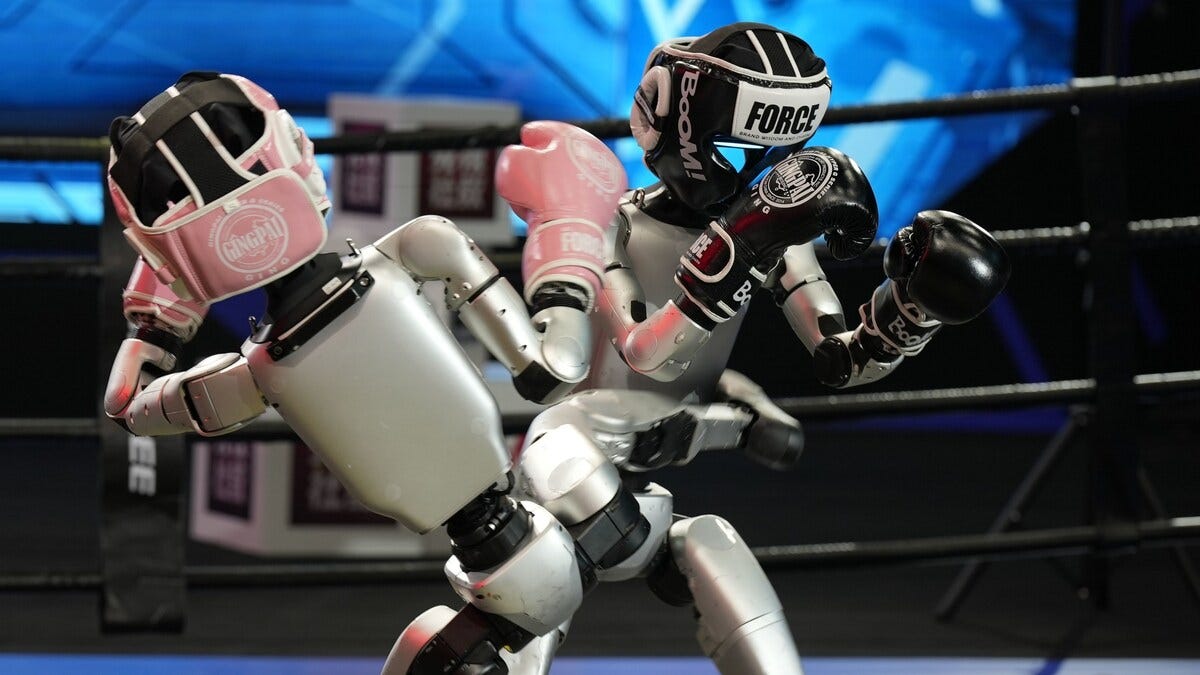
In August 2023, Unitree unveiled its first full-sized humanoid robot, the H1.
In media interviews, Wang revealed that the project initially involved only three full-time employees, with additional support drawn part-time from the quadruped robot team. The entire development effort involved fewer than ten people and was completed in roughly six months of closed-door development.
With the quadruped robot tech stack already mature, the marginal technical increment required for the humanoid transition was largely concentrated on the specific challenge of “bipedal balance control.” Unitree’s previously accumulated motion control capabilities from its quadruped robots provided the foundation for this rapid delivery.
The H1 stands approximately 1.8 meters tall, weighs about 47 kg, features 23 degrees of freedom, reaches a movement speed of 3.3 m/s, and delivers a peak joint torque of 360 N·m.
In 2023, the company shipped just five units, with an average selling price of 593,400 yuan.
At the 2025 World Humanoid Robot Games, the H1 clinched gold in both the 1500m (finishing in 6:34) and the 400m races, and became the world’s first electric-powered, full-sized humanoid to perform a backflip.
In May 2024, Unitree launched the G1 with a starting price of 99,000 yuan. Standing about 1.3 meters tall and weighing 35 kg, it features 23 degrees of freedom, a maximum knee joint torque of 90 N·m, and a battery life of approximately 2 hours.
The G1 was the industry’s first full-sized humanoid robot to break the 100,000 yuan price barrier—a stark contrast to the 500,000 to 2 million yuan range typical for comparable models at the time.
In 2024, Unitree shipped 412 humanoid units with an average selling price of 260,400 yuan and a gross margin of 69.26%.
In July 2024, the company launched the entry-level R1. Standing about 1.21 meters tall, weighing 25 kg, and featuring 24 degrees of freedom, it debuted at 39,900 yuan before dropping to 29,900 yuan in June 2026. Equipped with a humanoid binocular camera, the R1 became the first Chinese humanoid robot available for direct purchase in North America, Europe, and Japan via AliExpress.
Phase 4: Mass Production at Scale & Going Public (2025–2026)
2025 marked Unitree’s breakout year.
Humanoid robot shipments surged 12.4-fold to 5,511 units, while revenue jumped 332% to 1.699 billion yuan, and adjusted net profit skyrocketed 674% to 591 million yuan. For the first time, humanoid robot revenue surpassed quadrupeds, accounting for 51.78% of the total.
In October 2025, Unitree unveiled the H2, an upgraded version of the H1 featuring 31 degrees of freedom, a weight of approximately 70 kg, and a bionic face design. It publicly demonstrated ballet and martial arts movements. The company also introduced the G1-D, a wheeled bipedal variant designed for rapid deployment on flat surfaces like factory floors.
In May 2026, Unitree launched the GD01, a manned transforming mecha. Standing nearly 2.7 meters tall and weighing about 500 kg, it can switch between bipedal and quadrupedal modes in approximately 2.8 seconds, with a starting price of around 3.9 million yuan.
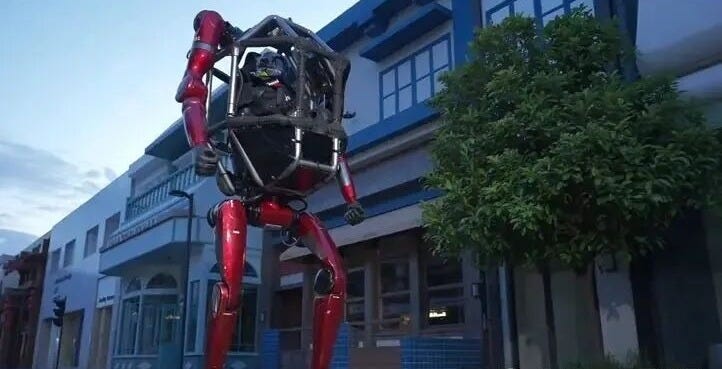
As of May 2026, cumulative production of the G1 has reached approximately 11,000 units. Before the G1, no humanoid robot globally had ever achieved a production volume in the tens of thousands. Boston Dynamics’ Atlas remains a non-commercial lab prototype, Tesla’s Optimus shipped around 150 units in 2025, and UBTECH delivered roughly 1,079 units. Reaching this scale marks a definitive shift from “customized prototypes” to “standardized mass production.” To date, no other humanoid robot matches the G1’s level of stable performance.
These four phases of product iteration have ultimately crystallized into Unitree’s complete product portfolio. The company has established three core product lines—quadruped robots, humanoid robots, and components & accessories—covering the entire price spectrum from consumer-grade (tens of thousands of yuan) to industrial-grade (hundreds of thousands of yuan), and from entry-level to flagship humanoids.
Unitree isn’t just building individual products; it’s building price tiers.
Quadruped Robots: Priced from 8,997 yuan to 400,000 yuan.
Humanoid Robots: Priced from 26,900 yuan to 199,000 yuan.
Virtually every price point has a corresponding product. Spreading this wide without robust production lines and a powerful supply chain would be impossible. This comprehensive matrix reflects Unitree’s ambitious character and serves as the core pillar of its value proposition.
This creates a symbiotic business structure: quadruped robots serve as the profit base and cash flow source, where scaled production amortizes the cost of core components like actuators, providing the technical and supply chain foundation for humanoid expansion. Humanoid robots act as the growth engine and valuation anchor, with the G1’s volume validating the feasibility of migrating “quadruped-era” technical accumulation to the humanoid domain.
In essence, Unitree operates on a model of “nurturing humanoids with quadrupeds, and lifting valuation with humanoids.”
The Robot Brain
Unitree, which has long focused primarily on building the robot "body," was once criticized as merely a "toy maker" precisely because it lacked a robust "brain." Now, the company is actively working to catch up in this critical area.
Unitree’s investment in the “brain” began in 2024, eight years after it started robot R&D. UnifoLM is Unitree’s embodied intelligence large model system, encompassing two technical directions: the World-Model-Action (WMA) architecture and the Vision-Language-Action (VLA) large model.
However, it has not yet conducted large-scale real-world data collection or factory deployment training. The urgency to address this shortcoming is clearly reflected in its budget plan, with 48.13% of the IPO fundraising allocated to model R&D projects.
At the GTC Taipei exhibition in June 2026, NVIDIA CEO Jensen Huang announced a collaboration with Unitree to launch the H2 Plus GR00T humanoid robot reference design, powered by the NVIDIA Jetson AGX Thor T5000 computing platform. However, reports indicate that NVIDIA replaced Unitree’s self-developed robotic arm solution in this partnership.
Amid ongoing U.S. sanctions, this technical decoupling suggests that the two companies have already implemented isolation measures in certain areas. However, with the introduction of new FCC regulations, the prospects for future collaboration appear even more challenging.
Unitree is now shifting its collaborative focus toward domestic AI large model companies. According to its IPO prospectus, its strategic investor, DeepSeek, is classified as a large enterprise or its subsidiary with a strategic partnership or long-term cooperative vision with the issuer.
DeepSeek’s strategic investment in Unitree has also shed light on the equity structure of this enigmatic AI company, representing a crucial piece of market intelligence.
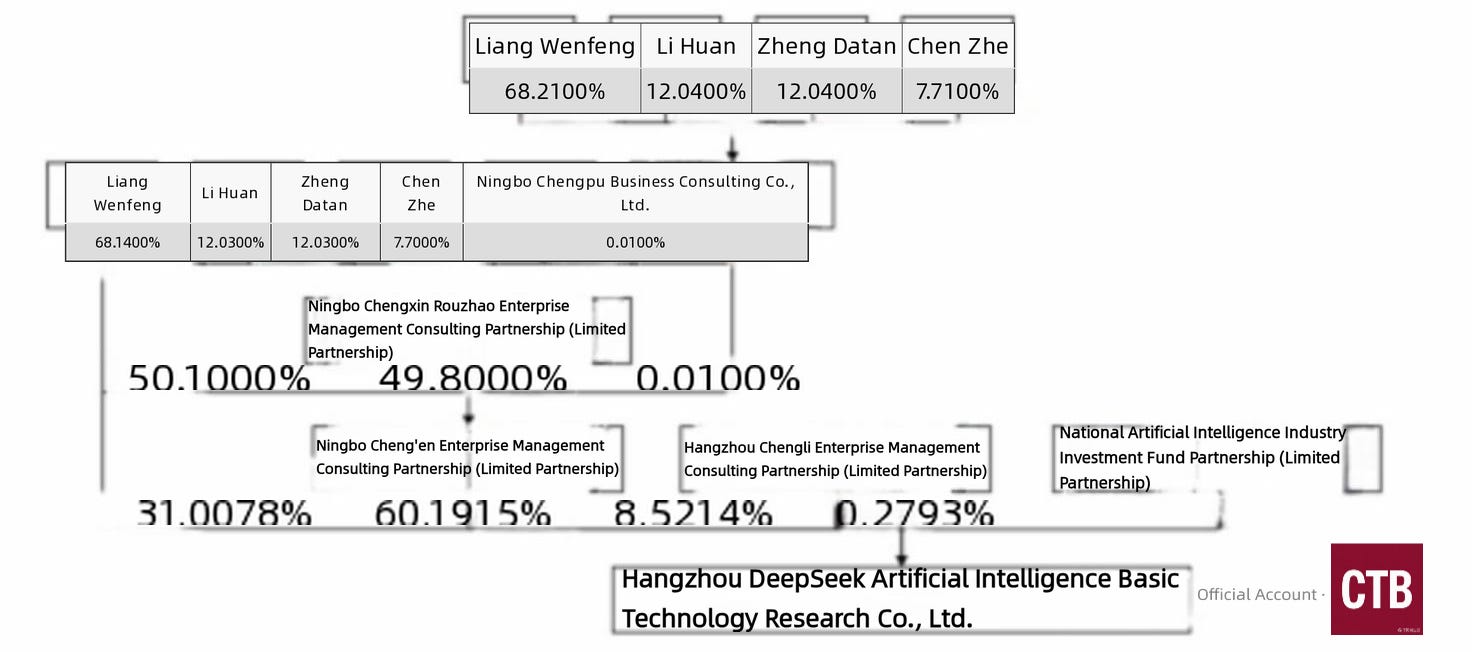
In simpler terms, this collaboration is aimed at a long-term industry goal: enabling large models to serve as the "brain" of robots, while the robot hardware acts as the "body" for AI to interact with the physical world. Unitree stated in its announcement that the company plans to introduce leading enterprises in the large model sector for three key purposes.
We will collaborate on joint R&D for Artificial General Intelligence (AGI).
We will engage in deep cooperation on high-performance general-purpose robots.
We will conduct in-depth collaboration on large AI models.
Returning to Unitree's current business model, its supply chain strategy can be distilled into a single principle: in-house development and manufacturing of core components, with non-core parts outsourced.
For components that directly impact motion performance and cost structure—such as motors, reducers, drivers, and algorithms—Unitree handles everything in-house. For sensors, bearings, batteries, and chips with mature supply chains, it opts for external procurement.
A July 2026 teardown analysis of the G1 by SemiAnalysis revealed a material cost of under $9,000 (approximately 65,000 yuan). Against its 99,000 yuan selling price, this translates to a gross margin of about 67%, closely aligning with the 69.26% humanoid gross margin disclosed in the 2024 prospectus.
A teardown by Nikkei xTECH reached a similar conclusion: “Chinese robot R&D has surpassed the demonstration phase; it is unrealistic for Japan to close the gap in the short term.”
So, who is actually footing the bill for these robots?
Who’s Buying Unitree?
By Region (2025):
Domestic: ~56%
Overseas: ~44%
By Application Scenario (First Three Quarters of 2025):
Research & Education: 73.6%
Commercial, Consumer & Exhibition: ~17.4%
Industrial Applications: ~9%
In short, the vast majority of Unitree’s humanoid robots are being purchased for research and education. However, this 73.6% figure needs to be viewed dialectically.
Looking at quadruped robot data, the R&E share has dropped from 68.61% in 2022 to 31.58% in the first nine months of 2025, while commercial/consumer and industrial applications have risen to 42.30% and 26.12% respectively. This indicates that quadrupeds are successfully transitioning from research validation to commercial deployment.
In contrast, the 73.6% R&E share for humanoids confirms they are still firmly in the research validation phase. The R&E market is a “must-have” segment—universities and research institutes have stable budgets, short procurement cycles, and high repurchase rates. Over 40% of global brands using humanoid robots are Unitree customers.
However, this market has a clear ceiling. Industrial applications currently account for only 9% and are concentrated in shallow scenarios like corporate guided tours. Humanoid robots have yet to find a sustainable, profitable model in true commercial settings like industrial manufacturing, logistics, and service industries.
Domestic Customers:
Unitree’s domestic client base spans e-commerce platforms, telecom operators, manufacturers, and universities.
JD.com: As Unitree’s largest domestic customer in 2025 (likely a channel partner).
China Mobile (Hangzhou Branch): Unitree, partnered with Agibot, wins a 124 million yuan humanoid robot OEM procurement project (46.05 million yuan portion). This marked the first bulk deployment of humanoid robots in telecom equipment manufacturing.
Tongji University: Purchased 10 H1-2 units for 8.2566 million yuan, the largest known single-university procurement to date.
Manufacturing: CRRC Zhuzhou and NIO factories have deployed Unitree robots for trial use in material handling and assembly. Shanghai Lingang Water Plant deployed G1 for intelligent inspection (1.095 million yuan).
Academia: Nearly 30 institutions, including Sun Yat-sen University and Southern University of Science and Technology, have purchased Unitree products for teaching and research.
Quadruped Industrial Deployment: Units are actively used for inspection at the 500kV Lanting Substation (Zhejiang), Hangzhou Binjiang underground utility tunnels, and the BASF petrochemical base (Zhanjiang, Guangdong), generating recurring revenue.
Overseas Customers:
Overseas markets are Unitree’s second major growth engine, with 43.65% of 2025 revenue coming from Europe, North America, and East Asia.
Europe: “Customer N” was the largest overall client in 2025, contributing 52.8874 million yuan via UK distributor iRed Limited, with end-users spanning European universities and research institutes.
Japan: “Customer A” ranked second at 42.8266 million yuan, with end-clients including Japanese electronics manufacturers, national research universities, and listed automakers, distributed by TechShare Co., Ltd.
South Korea: “Customer B” purchased 30.0216 million yuan worth of products through Young In Mobility, a subsidiary of the 50-year-old Young In Group.
North America: California-based ToverlifeAI distributes ~100 robots monthly to universities and research institutions across the U.S., serving nearly 1,000 end clients. Canadian retailer RobotShop is also a key partner.
Unitree’s overseas customer base is primarily R&E-focused with supplementary industrial applications. Its distribution network now covers major developed markets, with overseas revenue nearing half of the total—placing it in a leading position among Chinese humanoid robot companies in terms of internationalization. The FCC's robotics blockade, if implemented strictly, will hit U.S. university labs severely, effectively putting the brakes on their algorithm R&D progress.
Many U.S. robot hobbyists who have been modifying Unitree's hardware would also be impacted. Not long ago, a tear-jerking story went viral on YouTube, where a son used a Unitree robot dog to build a custom wheelchair for his father.
Why Unitree Is Profitable?
Unitree’s revenue surged from 159 million yuan in 2023 to 393 million yuan in 2024, and then to 1.699 billion yuan in 2025, representing year-over-year growth rates of 147% and 332.64%, respectively—a roughly 10.7-fold increase over two years.
In 2025, humanoid robot revenue accounted for 51.78% of the total, surpassing quadruped robots (41.62%) for the first time, with components and other segments making up the remaining 6.19%.
The price-volume trajectory of Unitree’s humanoid robots follows a textbook hardware penetration curve: the average selling price dropped from 590,000 yuan to 260,000 yuan, and then to 166,000 yuan. This decline reflects a product mix shift from the flagship H1 to the volume-driving G1. While the gross margin dipped slightly from 69.26% to 63.18% due to a higher proportion of lower-margin entry-level models, as well as yield losses and fixed cost allocation pressures during production ramp-up, a 63% margin remains relatively high for the hardware industry.
Quadruped robots followed a similar path: sales grew from 3,121 units at an average price of 38,300 yuan in 2023 to 23,037 units at 30,300 yuan in 2025. Despite a 21% drop in average price, the gross margin rose from 51.65% to 56.72%. Higher volumes diluted unit fixed costs, allowing unit profits to increase even as prices fell.
Unitree’s profitability, in contrast to competitors’ losses, stems from fundamental differences in cost structure, which can be broken down into four key factors:
Self-developed components lowering BOM costs.
Quadruped legacy reducing fixed costs.
Tens-of-thousands scale diluting R&D and manufacturing expenses.
The research & education market providing a stable revenue base.
Placing Unitree’s valuation in the context of comparable companies:
UBTECH: 2025 revenue of 2.001 billion yuan, net loss of 703 million yuan, market cap of ~50 billion yuan, and a price-to-sales (P/S) ratio of ~25x.
Agibot: 2025 revenue of 1.05 billion yuan, target valuation of 40–50 billion HKD (~34.6–43.3 billion yuan), and a P/S ratio of 33–41x.
Figure AI: Shipped only hundreds of units in 2025, unprofitable, with a valuation of $39 billion (~270 billion yuan).
Future Risks
Standing at the forefront of the humanoid robot wave, Unitree faces intertwined opportunities and risks.
On the business front, while its customer base is relatively diversified, its revenue remains heavily skewed toward research and education, which accounted for 73.6% in the first three quarters of 2025. Genuine industrial applications made up only 9%. The R&E market has a clear ceiling. While quadruped robots successfully transitioned from labs to industry, humanoids have yet to undergo real-world factory validation. Whether they can replicate that transformation remains an open question.
Overseas, geopolitical headwinds are mounting. Despite existing products being certified and U.S. revenue being actively scaled back, the “military enterprise” label casts a shadow that could spill over to allied markets, introducing uncertainty into its global expansion.
Also, with production capacity doubling at its Wuxi base, the company now faces the practical challenge of digesting output while contending with depreciation and price wars.
The good news is that IDC forecasts global humanoid robot shipments to exceed 510,000 units by 2030, implying roughly 30x growth over the next five years.
Whether Unitree can maintain its lead in this growth cycle depends on its ability to build moats across three dimensions: (1) motion control, (2) intelligence, and (3) commercial scenarios. The current answer is: leading in the first, catching up in the second, and yet to be proven in the third.
There are currently nearly 20 embodied AI companies that have either reached or initiated the IPO process. This includes DeepRobotics and Fourier Intelligence, which are also racing for the STAR Market, as well as AgileX Robotics, Galbot, Galaxea-ai, AI2Robotics, which are targeting the Hong Kong Stock Exchange.
In the view of China Tech Bite, failing to surpass human efficiency or cost-effectiveness in industrial and commercial settings is a big hurdle for all humanoid robots—and the primary driver of potential valuation pullbacks in the capital markets.
At a Xi’an forum in July, Wang said that the "ChatGPT moment" for embodied AI could arrive in as little as two to three years, at which point robots would be able to operate directly and perform many basic tasks in most unfamiliar environments.
Unitree’s prospectus reads:
We stand at the eve of a global breakthrough in AI and embodied intelligence. While this vision once seemed distant, a decade of relentless dedication has now given us the confidence and capability to truly pursue and realize this dream.
Reference: